In various industrial applications, choosing the right pump can significantly impact operational efficiency, product quality, and maintenance costs. One such pump that offers a host of advantages is the peristaltic pump. In this blog, we will explore the key benefits of peristaltic pumps, their working principles, applications, and how they compare to other pump types. We’ll also delve into why NETZSCH Pumps & Systems, offered by Godavari Tech, should be your preferred choice for reliable and efficient pumping solutions.
What is a Peristaltic Pump?
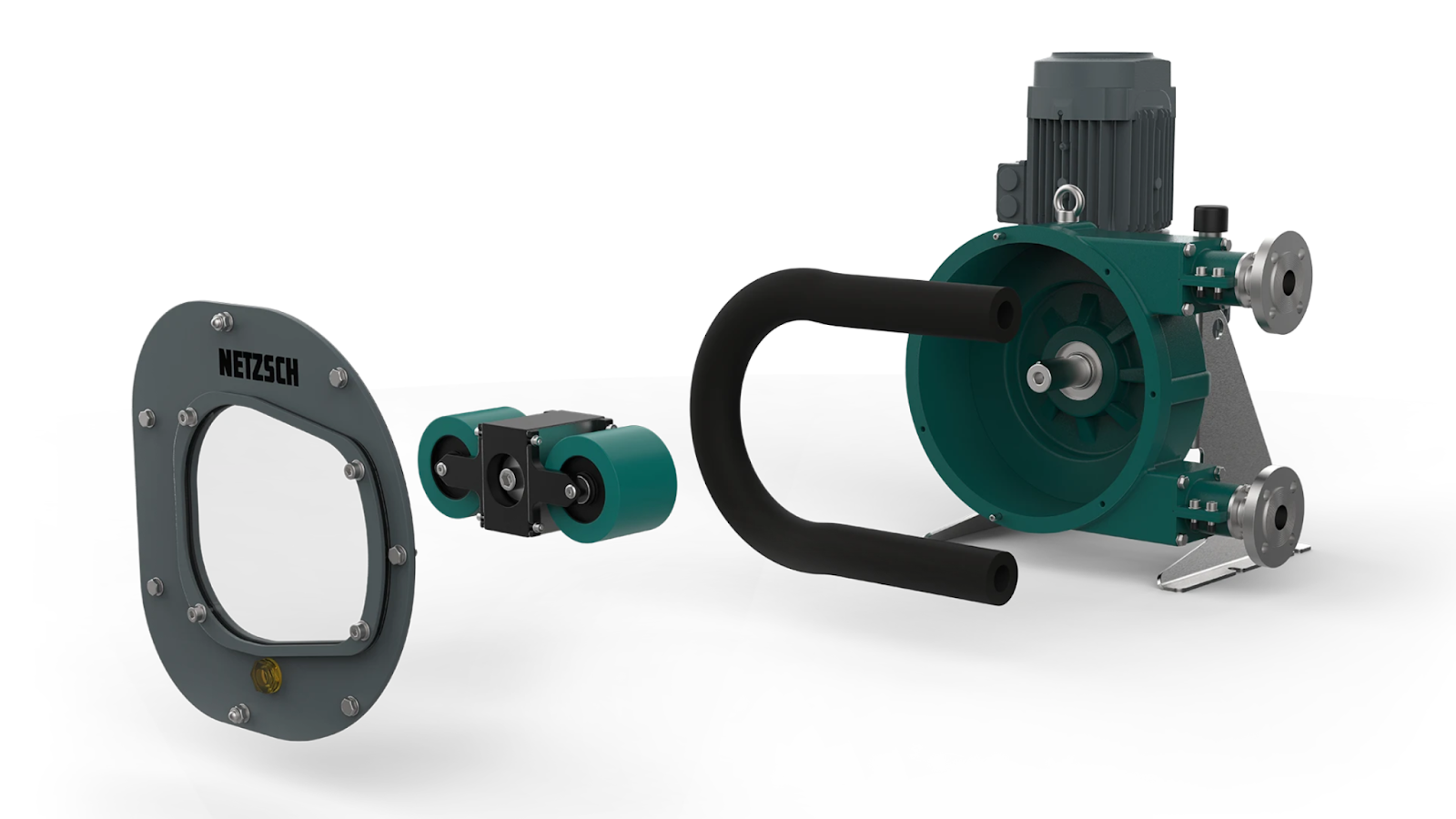
A peristaltic pump, also known as a hose pump, is a type of positive displacement pump used to move fluids. It operates by compressing a flexible tube or hose to push fluid forward, much like how your intestines move food through the digestive tract. This action ensures that the pumped fluid never comes into contact with the pump’s moving parts, which makes it ideal for handling sensitive, abrasive, or corrosive fluids.
Advantages of the Peristaltic Pump:
- Contamination-Free Pumping: Since the fluid only touches the inside of the hose or tube, the risk of contamination is minimal. This makes peristaltic pumps ideal for industries like pharmaceuticals, food and beverages, and chemicals.
- Low Maintenance: With fewer moving parts and no valves or seals to wear out, peristaltic pumps require less maintenance compared to other pump types, reducing downtime and repair costs.
- High Chemical Resistance: The hoses and tubes used can be tailored to handle aggressive chemicals, making these pumps suitable for corrosive environments.
- Self-Priming: Peristaltic pumps can self-prime, which means they can run dry without damage and handle air and gas in the fluid.
- Accurate Dosing and Metering: The fixed displacement per revolution allows for highly precise dosing, making them perfect for applications requiring strict flow control.
Areas of Application for the Peristaltic Pump:
Peristaltic pumps find applications in a wide range of industries due to their versatility. Common applications include:
- Pharmaceuticals: For sterile and contamination-free transfer of sensitive liquids.
- Food & Beverage: Ideal for transferring fluids like sauces, juices, and dairy without contamination.
- Chemical Processing: Suitable for corrosive chemicals, acids, and slurry transfer.
- Water Treatment: Used for dosing chemicals and handling sludge.
Function of the Peristaltic Pump:
The peristaltic pump operates through a simple mechanism. A series of rollers or shoes compresses a flexible hose, creating a vacuum that draws fluid into the hose. As the roller moves, it pushes the fluid forward. Once the roller passes, the hose returns to its original shape, creating a vacuum that continues drawing fluid into the hose. This cyclical process ensures a consistent, pulse-free flow of fluid.
Peristaltic Pump Compared to Other Pump Types:
Peristaltic pumps offer unique advantages compared to other pump types, making them the preferred choice in many applications. In contrast to the piston, gear or centrifugal pumps, where the pumped medium comes into direct contact with the pump’s mechanical parts, with peristaltic pumps, the medium is transported only through a flexible hose. This significantly reduces your risk of contamination. While centrifugal pumps efficiently pump large quantities and delivery heads, peristaltic pumps offer you precise and pulsation-free dosing. This makes them particularly suitable for accurate dosing and filling processes. Compared to gear pumps, which are sensitive to abrasive and viscous media, a peristaltic pump is also particularly robust. This means you can pump solids-laden and viscous media without any problems. Another decisive advantage that a peristaltic pump offers you is the ease of maintenance. As the hose is the only wearing part, maintenance and servicing costs are significantly lower than those of pump types.
Why NETZSCH Pumps & Systems for Your Peristaltic Pump?
NETZSCH Pumps & Systems, available through Godavari Tech, are globally recognized for their high-quality engineering and reliability. Their peristaltic pumps offer robust designs suitable for even the most challenging industrial applications. Whether you need a pump for precise dosing or heavy-duty fluid transfer, NETZSCH’s innovative technology ensures long-lasting performance, energy efficiency, and minimal maintenance. With Godavari Tech’s strategic offices across India, customers receive 24×7 service and quick, efficient support, ensuring that operations run smoothly.
Conclusion
Choosing the right pump for your application can make a significant difference in efficiency, cost, and product quality. Peristaltic pumps offer numerous benefits, including contamination-free operation, low maintenance, and versatility across industries. When comparing them to other pump types, their advantages become even more evident.
If you’re looking for a reliable and efficient peristaltic pump, Godavaritech, in partnership with NETZSCH Pumps & Systems, provides top-tier solutions with unmatched customer support. From installation to maintenance, Godavari Tech ensures your business keeps running smoothly.