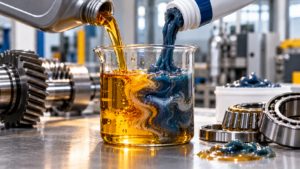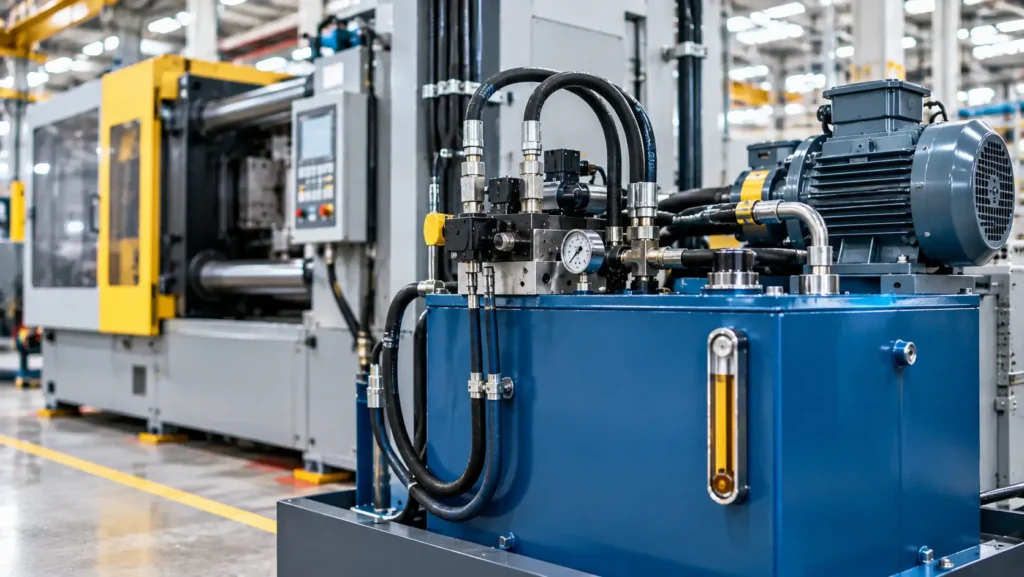

Industrial hydraulic systems depend on clean, thermally stable and properly formulated hydraulic oil to transmit power, lubricate moving components and maintain consistent operating performance. From manufacturing machinery and injection moulding equipment to steel plants and heavy industrial presses, hydraulic oil plays an essential role in equipment reliability.
However, prolonged exposure to heat, oxygen and contamination can gradually change the condition of hydraulic oil. One potential consequence is varnish formation – the accumulation of thin, hard deposits on internal machine surfaces, including valves, reservoirs and other hydraulic components.
Varnish formation is particularly concerning in precision hydraulic systems because even small deposits can interfere with the movement of sensitive components. Sticking servo valves, restricted clearances, filter blockage and inconsistent system response can increase maintenance requirements and disrupt production.
Understanding why varnish develops, how to identify early warning signs and which preventive measures are effective can help maintenance teams protect hydraulic equipment and extend lubricant service life.
What Is Hydraulic Oil Varnish?
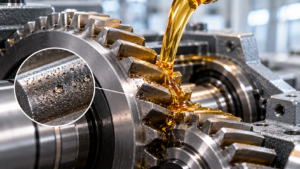
Hydraulic oil varnish refers to deposits formed when oil degradation products and other contaminants accumulate on internal hydraulic system surfaces.
These deposits may appear as thin films, sticky residues or hardened layers. Their colour and appearance can vary depending on the oil formulation, degradation mechanism and operating conditions.
Varnish is generally associated with the formation and accumulation of poorly soluble degradation products. As hydraulic oil ages, oxidation and thermal stress can generate chemical compounds that may remain dissolved initially but later separate from the oil and deposit on surfaces.
Varnish should not be confused with sludge, although both can occur in degraded hydraulic systems.
- Varnish: Typically forms as thin films or adherent deposits on internal surfaces, including valves and other precision components.
- Sludge: Generally refers to softer, heavier accumulations of degraded oil, contaminants and insoluble material that may collect in reservoirs and other low-flow areas.
Both conditions can affect hydraulic system cleanliness and operating reliability.
1. What Causes Varnish Formation in Hydraulic Systems?
Varnish formation usually results from multiple interacting factors rather than a single cause. Oil oxidation, thermal degradation, contamination and operating conditions can all contribute to the problem.
Oil Oxidation
Oxidation occurs when hydraulic oil reacts with oxygen over time. The process can accelerate when the oil is exposed to elevated temperatures, catalytic metals and other conditions that promote chemical degradation.
As oxidation progresses, the oil may develop acidic compounds, deposits and other degradation products.
Some of these products can become less soluble as the oil condition changes. When they separate from the lubricant, they may accumulate on internal hydraulic surfaces and contribute to varnish formation.
Using hydraulic oils with suitable oxidation resistance and maintaining appropriate operating conditions can help control this risk.
Thermal Degradation and Localised Overheating
High operating temperatures can accelerate lubricant degradation.
Hydraulic systems may experience localised overheating due to restricted flow, excessive pressure losses, unsuitable component sizing, inadequate cooling or continuous operation under demanding loads.
Even when the reservoir temperature appears acceptable, localised hot spots around pumps, valves and other components can expose the oil to more severe thermal conditions.
Repeated thermal stress can contribute to the formation of degradation products that eventually participate in varnish accumulation.
Contamination and Poor Oil Cleanliness
Contaminants can influence hydraulic oil condition and contribute to equipment deterioration.
Common sources include:
- Dust and airborne particles entering through breathers or seals.
- Water ingress through condensation, leaks or maintenance activities.
- Metal particles generated by component wear.
- Residual deposits from previously degraded lubricant.
- Contamination introduced during oil storage and transfer.
Water and particulate contamination can affect lubricant performance, promote corrosion and accelerate wear. They may also contribute to the wider conditions in which varnish and sludge develop.
Inadequate Maintenance and Extended Oil Service Intervals
Hydraulic oil gradually changes during operation. If its condition is not monitored, degradation may progress without being identified.
Extended service intervals without appropriate oil analysis can allow oxidation products, contamination and other unwanted materials to accumulate.
Preventive maintenance should therefore be based on operating conditions, manufacturer recommendations and lubricant condition rather than relying exclusively on fixed calendar intervals.
2. How Varnish Affects Hydraulic System Performance
Varnish can interfere with the operation of precision hydraulic components. Its impact depends on the amount of deposit, the location of accumulation and the sensitivity of the equipment.
Sticking Servo and Proportional Valves
Servo and proportional valves control hydraulic flow and pressure with high precision. They contain closely controlled internal clearances that allow accurate movement and response.
Varnish deposits can interfere with valve movement, increasing friction or restricting the movement of internal components.
Possible consequences include delayed response, inconsistent control, unstable machine operation and reduced positioning accuracy.
This is particularly important in applications where hydraulic control directly influences manufacturing precision.
Restricted Valve Clearances
Varnish accumulation can reduce the effective clearance between moving valve components.
As deposits increase, components may become more difficult to move, potentially affecting hydraulic flow regulation and system responsiveness.
Increased Filter Loading
Degraded oil products and contaminants can contribute to filter loading. Depending on the nature of the deposits, filters may experience reduced service life or increased differential pressure.
A filter that becomes excessively loaded may trigger bypass operation in systems designed with a bypass mechanism, potentially allowing inadequately filtered oil to circulate.
Increased Maintenance and Production Downtime
Varnish-related valve sticking, inconsistent hydraulic response and repeated filter problems can increase maintenance intervention.
In continuous manufacturing operations, these issues may result in production interruptions, additional cleaning requirements and unplanned equipment downtime.
4. Warning Signs of Varnish Formation in Hydraulic Oil
Varnish can develop gradually, making early identification important. Maintenance teams should monitor changes in equipment behaviour, lubricant condition and filtration performance.
Some common warning signs include:
Sticking or Sluggish Hydraulic Valves
Servo and proportional valves may respond slowly or inconsistently when deposits interfere with their internal movement.
Operators may notice delayed machine response, inconsistent actuator positioning or irregular pressure control.
Frequent Filter Replacement
An increase in filter replacement frequency or differential pressure may indicate contamination or deposit accumulation.
However, filter blockage can have several causes, so varnish should not be assumed without further investigation.
Unusual Oil Discolouration or Odour
Changes in oil colour, darkening or an unusual smell can indicate lubricant degradation. These signs are useful indicators but cannot independently confirm varnish formation.
Increasing Operating Temperature
Higher oil temperatures may indicate excessive friction, restricted flow, reduced cooling efficiency or other hydraulic system problems.
Varnish deposits on heat-transfer surfaces can also affect heat dissipation, potentially contributing to higher operating temperatures.
Visible Deposits on Internal Components
During planned inspections, technicians may identify brown, amber or dark deposits on reservoir surfaces, valve components and other oil-wetted areas.
Visual inspection can provide useful evidence, although laboratory analysis may be required to understand the nature and extent of the contamination.
Mobil’s hydraulic system maintenance guidance also highlights the relationship between excessive temperature, oil degradation, varnish deposits and sluggish or sticking servo valves.
Mobil+1
5. How Oil Condition Monitoring Helps Detect Varnish
Routine oil condition monitoring helps maintenance teams identify lubricant degradation before it develops into a major equipment problem.
Rather than relying only on operating symptoms, businesses can use laboratory analysis and suitable condition-monitoring techniques to assess the oil’s chemical and physical condition.
Oxidation and Nitration Testing
Oxidation testing helps identify chemical degradation caused by reactions between the lubricant and oxygen.
Nitration testing can help identify degradation associated with nitrogen-containing compounds under certain operating conditions.
Infrared spectroscopy is commonly used to monitor oxidation and nitration trends. Comparing results with unused oil and previous samples helps identify changes in lubricant condition.
Varnish Potential Testing
Membrane Patch Colorimetry (MPC) is a commonly used method for evaluating the potential for varnish-forming material in lubricating oil.
The test separates insoluble material from an oil sample using a membrane and evaluates the colour of the resulting deposit.
MPC results can help identify increasing varnish potential, but they should be interpreted alongside other oil analysis results and equipment operating conditions.
Viscosity and Acid Number
Changes in viscosity can indicate oxidation, contamination or other lubricant degradation processes.
Acid number testing helps assess the accumulation of acidic compounds in the oil. An increasing acid number may indicate deterioration, although it does not independently confirm varnish.
Particle Count and Water Content
Particle counting helps evaluate the cleanliness of hydraulic oil, particularly in systems containing precision control valves.
Water-content testing identifies moisture that may contribute to corrosion, lubricant degradation and other operating problems.
Combining these tests provides a more complete picture of lubricant health than relying on a single measurement.
6. Preventive Maintenance Practices to Control Varnish Formation
Preventing varnish requires a combination of appropriate lubricant selection, temperature management, contamination control and regular condition monitoring.
Maintain Appropriate Operating Temperatures
Monitor hydraulic oil temperatures and ensure that cooling systems operate correctly.
Clean oil coolers, maintain adequate reservoir oil levels and investigate unusual temperature increases. Also examine pressure losses, restricted flow and other conditions that may create localised hot spots.
Select Hydraulic Oil with Suitable Oxidation Resistance
The quality of the base oil and additive formulation influences the lubricant’s ability to resist oxidation and maintain its properties during service.
For demanding hydraulic applications, select an oil with suitable oxidation stability, thermal performance, antiwear protection and air-release characteristics.
The lubricant should meet the hydraulic system manufacturer’s viscosity and performance requirements.
Maintain Effective Filtration
Use appropriate filtration to control particulate contamination and protect precision hydraulic components.
Depending on the system design, filtration may include:
- Suction strainers for pump protection.
- Pressure-line filters for downstream components.
- Return-line filters to control contamination entering the reservoir.
- Dedicated filtration for sensitive servo-valve circuits.
Filter selection should consider the required cleanliness level, flow rate, pressure drop and component sensitivity.
It is important to understand that conventional particulate filtration does not necessarily remove dissolved varnish precursors. Where varnish contamination is established, specialised varnish-removal technologies may need to be evaluated separately.
Control Water and External Contamination
Keep reservoirs, filling points and lubricant storage areas clean.
Use suitable breathers and seals to minimise moisture and dust ingress. Check for cooler leaks, condensation and other potential sources of water contamination.
New hydraulic oil should also be handled carefully because contamination can be introduced during storage and transfer.
Follow Appropriate Oil Change Intervals
Hydraulic oil should be replaced according to its condition, equipment requirements and lubricant manufacturer’s recommendations.
Changing oil without addressing the source of degradation may not resolve the problem. Existing deposits can remain on internal surfaces even after fresh oil is introduced.
Where significant varnish has accumulated, cleaning or specialised removal procedures may be required.
Implement a Regular Oil Analysis Programme
Establish baseline oil condition measurements and compare subsequent samples at suitable intervals.
Monitoring oxidation, viscosity, water content, particle cleanliness and varnish potential helps maintenance teams identify trends and take corrective action before equipment performance deteriorates.
7. How to Manage an Existing Varnish Problem
When varnish has already developed, simply replacing the hydraulic oil may not be sufficient.
Degradation products can remain deposited on valve surfaces, reservoirs, filters and other internal components even after the original lubricant has been drained.
A systematic corrective approach is therefore important.
Step 1: Assess the contamination
Collect representative oil samples and review operating symptoms, oil analysis results, filter history and maintenance records.
Step 2: Identify the underlying cause
Investigate excessive temperatures, oxidation, contamination, inadequate cooling, unsuitable lubricant selection and other possible contributors.
Step 3: Evaluate the cleaning or removal requirement
Depending on the severity of the deposits, the maintenance team may consider component cleaning, system flushing or specialised varnish-removal technologies.
The appropriate method should be confirmed with the equipment and lubricant manufacturers.
Step 4: Replace or restore the lubricant as required
Use a suitable hydraulic oil that meets the equipment specifications. Ensure that the changeover procedure addresses compatibility and any remaining contamination.
Step 5: Monitor the system after corrective maintenance
Continue monitoring oil condition, filter differential pressure, valve response and operating temperature to determine whether the corrective measures have been effective.
This approach helps address both the existing deposits and the operating conditions responsible for their formation.
8. How Mobil Hydraulic Oils Support Industrial System Reliability
Mobil offers hydraulic lubricant solutions designed for different industrial operating conditions, including systems requiring antiwear protection, oxidation stability and reliable hydraulic performance.
Two relevant product families for industrial hydraulic applications include Mobil DTE 20 Series and Mobil DTE 20 Ultra Series.
Mobil DTE 20 Series
Mobil DTE 20 Series hydraulic oils are designed for industrial and mobile hydraulic systems requiring antiwear protection and reliable operation.
These oils are used in applications involving hydraulic pumps, industrial machinery and other hydraulic equipment where the lubricant must support component protection and system performance.
The appropriate viscosity grade should be selected according to the equipment manufacturer’s requirements and the actual operating conditions.
Mobil DTE 20 Ultra Series
Mobil DTE 20 Ultra Series hydraulic oils are formulated for demanding hydraulic applications requiring performance against wear, oxidation and deposit formation.
Their formulation is intended to support lubricant stability and help maintain hydraulic system cleanliness under suitable operating conditions.
For equipment operating under elevated temperatures or demanding duty cycles, the series may be worth evaluating where its technical specifications match the system requirements.
Important: No hydraulic oil can independently eliminate an existing varnish problem. Product selection should consider viscosity, hydraulic system design, OEM specifications, operating temperature and the condition of the existing lubricant. Refer to the latest Mobil technical data sheets before selecting or changing products.
How Godavaritech Supports Mobil Hydraulic Lubricant Requirements
Godavaritech supports industrial product sourcing, including Mobil hydraulic oils, for businesses operating across different industrial sectors.
Selecting an appropriate hydraulic lubricant requires an understanding of the equipment’s operating conditions, pressure requirements, temperature range, viscosity grade and maintenance practices.
Businesses looking for a Mobil Lubricants Distributor in India can discuss their application requirements with Godavaritech to identify suitable product options.
For hydraulic systems experiencing varnish-related symptoms, maintenance teams should also evaluate existing oil condition, filtration arrangements and potential sources of overheating or contamination.
Combining appropriate Mobil hydraulic lubricant selection with effective maintenance practices can help businesses support hydraulic system cleanliness, component protection and operating reliability.
Conclusion
Hydraulic oil varnish formation is a gradual degradation problem that can affect the performance and reliability of industrial hydraulic systems. Oxidation, thermal stress, contamination and inadequate maintenance can contribute to the formation of deposits that interfere with precision valves, restrict oil flow and increase maintenance requirements.
Preventing varnish requires more than changing hydraulic oil at regular intervals. Temperature management, suitable lubricant selection, effective filtration, contamination control and routine oil analysis are all important parts of a reliable maintenance strategy.
Mobil hydraulic oil ranges provide options for different industrial hydraulic applications, subject to equipment requirements and technical specifications.
For businesses operating critical hydraulic machinery, working with an experienced sourcing partner such as Godavaritech can help identify suitable Mobil lubricant options and support a more structured approach to industrial lubrication management.
Frequently Asked Questions
What causes varnish formation in hydraulic oil?
Varnish formation is primarily associated with oil degradation caused by oxidation, thermal stress and contamination. Elevated temperatures, water and metallic contaminants can accelerate the degradation process.
How does varnish affect hydraulic systems?
Varnish can accumulate on valve surfaces and restrict internal clearances. It may cause sticking servo valves, sluggish hydraulic response, filter problems and increased equipment maintenance.
How can varnish be detected in hydraulic oil?
Oil analysis methods such as oxidation testing, infrared spectroscopy and Membrane Patch Colorimetry (MPC) can help identify lubricant degradation and varnish potential. Visual inspection and operating symptoms provide additional information.
Can hydraulic oil filtration remove varnish?
Conventional particulate filters remove suspended contaminants but may not effectively remove dissolved varnish precursors. Specialised varnish-removal technologies may be required depending on the contamination level.
Which Mobil hydraulic oils are suitable for industrial applications?
Mobil DTE 20 Series and Mobil DTE 20 Ultra Series offer hydraulic lubricant options for industrial equipment. The appropriate product depends on viscosity requirements, operating conditions and equipment specifications.
Where can businesses source Mobil hydraulic oil in India?
Businesses can approach Godavaritech for Mobil hydraulic oil sourcing and discuss their equipment requirements. Product selection should be verified against the hydraulic system manufacturer’s specifications.