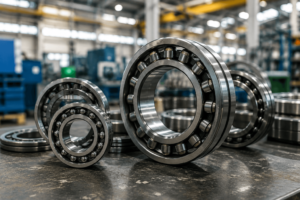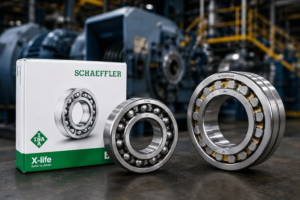

Industrial bearings are among the most critical components in rotating machinery. From electric motors and pumps to conveyors, compressors, gearboxes, crushers, and turbines, bearings enable smooth, efficient, and reliable equipment operation. Yet, despite being engineered for durability, bearings often fail prematurely not because of manufacturing defects, but due to improper handling throughout their operational life cycle.
Studies across industrial sectors consistently show that incorrect bearing selection, poor storage practices, improper installation, inadequate lubrication, contamination, and delayed replacement are the leading causes of bearing failures. These failures result in unexpected downtime, increased maintenance costs, lower productivity, and higher equipment ownership costs.
This is why Bearing Life Cycle Management has become an essential part of modern maintenance strategies. Rather than focusing only on bearing replacement after failure, life cycle management takes a proactive approach – optimising every stage from selection and installation to lubrication, monitoring, maintenance, and eventual replacement.
For industries seeking maximum equipment reliability, using Premium Industrial Bearings from the Schaeffler Group and partnering with an Authorized Distributor for Schaeffler can significantly improve operational efficiency and reduce total maintenance costs. As a trusted Schaeffler Bearings Supplier India, Godavaritech helps industries implement best practices that maximise bearing performance throughout their entire lifecycle.
What Is Bearing Life Cycle Management?
Bearing Life Cycle Management is a structured approach to managing bearings throughout their operational journey – from selecting the correct bearing for an application to monitoring its performance and replacing it before catastrophic failure occurs.
Instead of treating bearings as consumable components, this approach focuses on maximising their service life while reducing maintenance costs and unplanned downtime.
A complete bearing life cycle includes:
- Bearing selection
- Storage and handling
- Installation
- Lubrication
- Condition monitoring
- Maintenance
- Failure analysis
- Planned replacement
Each stage influences the overall reliability of industrial equipment.
Why Bearing Life Cycle Management Is Critical for Industrial Reliability
Modern industrial facilities demand continuous production with minimal downtime. Even a single bearing failure can halt an entire production line, affecting delivery schedules, maintenance budgets, and overall profitability.
An effective bearing life cycle management programme helps industries achieve:
- Higher equipment reliability
- Reduced unplanned downtime
- Lower maintenance costs
- Longer bearing service life
- Improved machine efficiency
- Better safety
- Increased return on equipment investment
Industries using Schaeffler Industrial Solutions benefit not only from high-quality bearings but also from engineering expertise that supports the complete lifecycle of rotating equipment.
Stage 1: Selecting the Right Bearing for the Application
Every successful bearing lifecycle begins with selecting the correct bearing. Choosing the wrong bearing – even if it fits physically – can significantly reduce equipment life and increase maintenance requirements.
Factors to consider include:
Load Requirements
Bearings must be capable of handling:
- Radial loads
- Axial loads
- Combined loads
- Shock loads
Heavy-duty industries such as mining, cement, and steel often require Premium Industrial Bearings engineered for demanding operating conditions.
Operating Speed
High-speed equipment requires bearings designed to minimise friction and heat generation while maintaining dimensional stability.
Applications include:
- Electric motors
- Compressors
- Turbines
- Machine tools
Operating Environment
Environmental conditions significantly influence bearing performance.
Considerations include:
- Dust
- Water exposure
- High temperatures
- Chemicals
- Corrosive environments
- Heavy vibration
Selecting the appropriate Schaeffler Group Products ensures reliable performance under challenging industrial conditions.
Equipment Design
Every machine has unique operational characteristics.
Correct bearing selection should align with:
- Shaft design
- Housing arrangement
- Lubrication method
- Operating tolerances
- Alignment requirements
Consulting a trusted Schaeffler Bearing Supplier helps ensure the correct bearing is selected from the outset, reducing the likelihood of premature failures.
Why Genuine Schaeffler Bearings Make a Difference
Not all bearings deliver the same level of performance. Genuine Schaeffler Group Products are manufactured using advanced materials, precision engineering, and rigorous quality standards that help industries improve machine reliability.
Benefits include:
- High load carrying capacity
- Superior dimensional accuracy
- Reduced friction
- Longer operating life
- Improved energy efficiency
- Lower maintenance requirements
Working with an Authorized Distributor for Schaeffler ensures access to genuine products backed by technical expertise and application support.
Stage 2: Proper Bearing Storage and Handling
Even the highest-quality bearing can suffer damage before installation if it is stored or handled incorrectly.
Proper storage practices protect bearings from contamination, corrosion, and accidental damage.
Best practices include:
- Store bearings in their original packaging
- Keep storage areas clean and dry
- Avoid excessive humidity
- Protect bearings from dust and chemicals
- Store at stable temperatures
- Rotate stock using first-in, first-out (FIFO) principles
Poor storage conditions often introduce microscopic corrosion that shortens bearing life before the equipment is even commissioned.
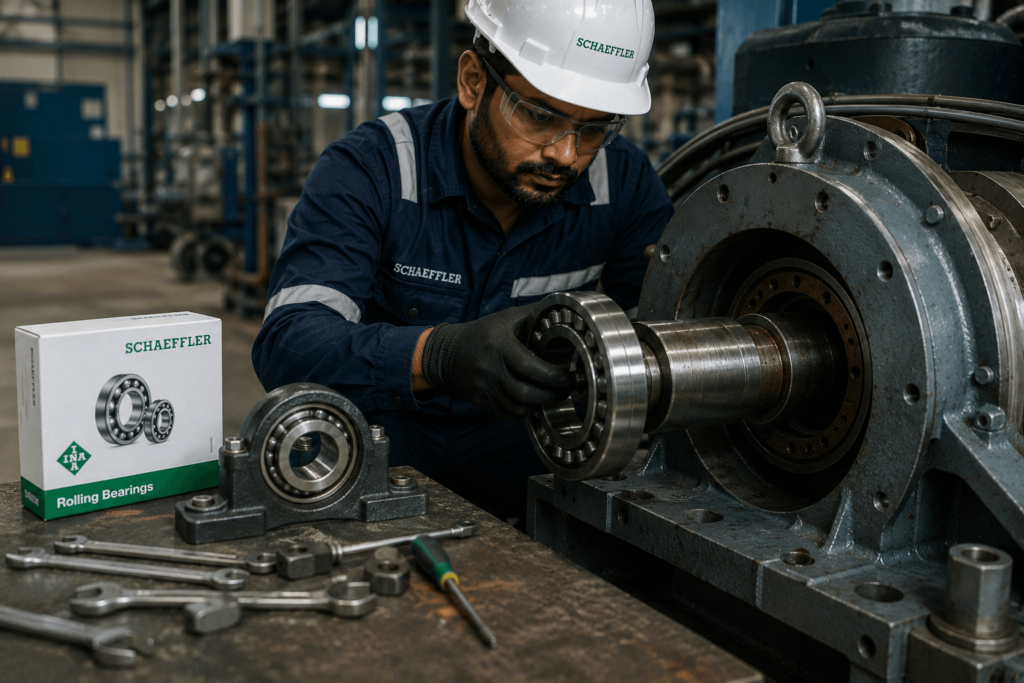
Stage 3: Correct Bearing Installation
Improper installation is one of the leading causes of premature bearing failure.
Forcing bearings onto shafts, using incorrect mounting techniques, or contaminating components during installation can permanently damage precision surfaces.
Professional installation should always include:
Equipment Inspection
Before installing a bearing, inspect:
- Shaft condition
- Housing dimensions
- Surface finish
- Alignment
- Cleanliness
Any defects should be corrected before installation begins.
Using the Right Installation Tools
Incorrect tools frequently cause:
- Raceway damage
- Indentation
- Misalignment
- Internal stress
Specialised mounting tools recommended for Schaeffler Industrial Solutions help ensure correct installation without damaging bearing components.
Maintaining Cleanliness
Contamination during installation is one of the most common causes of early bearing failure.
Maintenance personnel should:
- Wear clean gloves
- Use lint-free cleaning materials
- Protect components from airborne dust
- Avoid unnecessary handling
Even microscopic particles can significantly reduce bearing life.
Correct Mounting Techniques
Proper mounting procedures ensure:
- Correct internal clearance
- Uniform load distribution
- Reduced vibration
- Improved operating accuracy
Incorrect mounting often leads to excessive operating temperatures and premature wear.
Stage 4: Lubrication – The Key to Long Bearing Life
Lubrication is arguably the single most important factor influencing bearing performance.
Industry studies estimate that a large percentage of bearing failures are directly related to lubrication issues, including incorrect lubricant selection, contamination, over-greasing, or insufficient lubrication.
An effective lubrication programme should consider:
- Operating temperature
- Rotational speed
- Load conditions
- Environmental contaminants
- Lubrication intervals
- Lubricant compatibility
Selecting the correct lubricant for each application helps reduce friction, minimise wear, and extend bearing service life.
Grease vs Oil Lubrication
The choice between grease and oil depends on equipment design and operating conditions.
| Grease Lubrication | Oil Lubrication |
| Sealed bearings | High-speed equipment |
| Electric motors | Gearboxes |
| Conveyors | Turbines |
| Fans | Circulating systems |
| General industrial machinery | Continuous lubrication applications |
Using high-performance lubricants alongside Premium Industrial Bearings enables industries to maximise equipment reliability.
Common Mistakes That Shorten Bearing Life
Even premium bearings can fail prematurely when maintenance best practices are ignored.
Some of the most common lifecycle management mistakes include:
Choosing Bearings Based Only on Price
Lower-cost bearings often lack the precision, material quality, and engineering standards required for demanding industrial applications. Investing in genuine Schaeffler Group Products reduces the total cost of ownership through longer service life and greater reliability.
Purchasing from Unverified Sources
Counterfeit bearings remain a significant challenge for many industries. Buying from an Authorized Distributor for Schaeffler or a trusted Schaeffler Bearings Supplier India helps ensure product authenticity, technical support, and warranty-backed performance.
Ignoring Early Warning Signs
Abnormal vibration, unusual noise, increased operating temperature, and excessive lubrication leakage are often early indicators of bearing issues. Addressing these warning signs promptly can prevent costly equipment failures.
Delaying Preventive Maintenance
Waiting until a bearing fails completely often results in secondary damage to shafts, housings, seals, and adjacent components. Scheduled inspections and proactive maintenance significantly reduce repair costs and improve equipment availability.
Inadequate Documentation
Recording installation dates, lubrication intervals, inspection findings, and replacement history helps maintenance teams identify trends and optimise bearing performance across the plant.
Stage 5: Condition Monitoring – Detecting Problems Before Failure
Modern maintenance strategies have shifted from reactive repairs to predictive maintenance, where equipment is monitored continuously to identify potential issues before they result in costly breakdowns. Bearings provide valuable insights into machine health, making condition monitoring a vital stage in bearing life cycle management.
Instead of waiting for a bearing to fail, maintenance teams can use condition monitoring techniques to detect early signs of wear and schedule maintenance during planned shutdowns.
Industries implementing Schaeffler Industrial Solutions often integrate condition monitoring technologies into their maintenance programmes to improve asset reliability and optimise maintenance planning.
Vibration Analysis
Every rotating machine produces a unique vibration signature. Changes in this pattern often indicate bearing wear or developing faults.
Vibration monitoring helps detect:
- Inner race defects
- Outer race defects
- Rolling element damage
- Cage defects
- Shaft imbalance
- Misalignment
- Looseness
Detecting these issues early allows maintenance teams to replace bearings before secondary equipment damage occurs.
Temperature Monitoring
A gradual increase in bearing operating temperature may indicate:
- Lubrication problems
- Excessive friction
- Bearing overload
- Contamination
- Misalignment
Routine temperature monitoring helps identify abnormalities before they affect production.
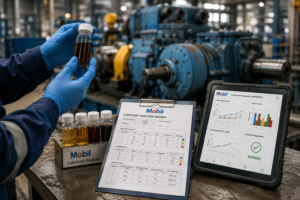
Lubricant Condition Monitoring
Lubricants provide important information about bearing health.
Regular lubricant analysis can reveal:
- Metal wear particles
- Water contamination
- Oxidation
- Dirt ingress
- Grease degradation
Monitoring lubricant condition enables industries to optimise lubrication intervals rather than relying solely on fixed maintenance schedules.
Noise Monitoring
Abnormal sounds often develop before visible bearing damage occurs.
Common warning signs include:
- Grinding
- Clicking
- Rattling
- High-frequency noise
These sounds should never be ignored, as they often indicate developing bearing damage.
Stage 6: Knowing When to Replace Bearings
Even with excellent maintenance practices, every bearing has a finite service life. Replacing bearings at the correct time prevents catastrophic failures and protects surrounding equipment.
The decision should be based on equipment condition rather than waiting for complete failure.
Signs That a Bearing Requires Replacement
Maintenance teams should consider replacement when they observe:
- Persistent vibration
- Increased operating temperature
- Visible corrosion
- Cracked or damaged raceways
- Lubricant contamination
- Excessive operating noise
- Surface pitting
- Fatigue spalling
- Increased power consumption
Replacing bearings before catastrophic failure protects shafts, housings, seals, gears, and adjacent rotating components.
Industry-Wise Bearing Life Cycle Best Practices
Different industries expose bearings to unique operating conditions. Selecting the right products and maintenance practices helps maximise bearing life across diverse applications.
| Industry | Key Bearing Challenges | Recommended Best Practice |
| Cement | Dust, shock loads, high temperatures | Use Premium Industrial Bearings, regular lubrication, contamination control |
| Steel | Heavy loads, extreme heat | High-load bearing selection and continuous condition monitoring |
| Mining | Dirt, moisture, vibration | Sealed bearings, predictive maintenance, proper storage |
| Power Generation | Continuous operation | Routine vibration analysis and planned replacement strategy |
| Paper & Pulp | Moisture, chemicals | Corrosion-resistant bearings and lubrication management |
| Food Processing | Washdowns, hygiene requirements | Correct bearing selection and contamination prevention |
| Automotive Manufacturing | High-speed automation | Precision installation and preventive maintenance programmes |
A tailored bearing life cycle strategy ensures consistent equipment reliability across every industry.
Why Choosing an Authorized Schaeffler Distributor Matters
A bearing’s performance depends not only on its design but also on its authenticity, technical support, and correct application. Purchasing bearings from unauthorised sources increases the risk of counterfeit products, incorrect product selection, and limited after-sales support.
Working with an Authorized Distributor for Schaeffler offers several advantages:
Genuine Schaeffler Group Products
Authorised distributors supply genuine bearings manufactured to Schaeffler’s stringent quality standards, ensuring reliable performance and longer service life.
Technical Expertise
An experienced Schaeffler Bearing Supplier can assist with:
- Bearing selection
- Product interchange
- Lubrication recommendations
- Installation guidance
- Maintenance best practices
- Application support
Access to the Complete Product Portfolio
Through an authorised channel, industries gain access to a wide range of Schaeffler Group Products, including solutions for electric motors, gearboxes, conveyors, pumps, compressors, and heavy industrial equipment.
Reliable Product Availability
Partnering with one of the Biggest Schaeffler Bearings Distributor in India networks helps minimise supply delays and ensures critical maintenance activities are not interrupted due to product shortages.
The Role of the FAG Bearing Catalogue in Bearing Selection
Selecting the right bearing begins with understanding technical specifications. The FAG Bearing Catalogue serves as a valuable reference for identifying suitable bearings based on dimensions, load ratings, operating conditions, and application requirements.
While the catalogue provides essential technical data, selecting the optimal bearing often requires application expertise. Factors such as operating speed, environmental conditions, lubrication methods, and maintenance requirements should also be considered.
Consulting an experienced Schaeffler Bearings Supplier India helps industries move beyond catalogue specifications to choose solutions that maximise equipment reliability and operational efficiency.
How Godavaritech Supports Complete Bearing Life Cycle Management
Effective bearing life cycle management requires more than supplying replacement bearings – it demands technical knowledge, application expertise, and access to reliable products throughout the equipment lifecycle.
As a trusted Schaeffler Bearings Supplier India, Godavaritech provides industries with genuine Schaeffler Group Products designed for demanding industrial applications. From assisting customers in selecting the right Premium Industrial Bearings to supporting installation, lubrication, and maintenance best practices, Godavaritech works closely with maintenance and procurement teams to improve equipment performance.
By partnering with an Authorized Distributor for Schaeffler, customers benefit from:
- Genuine Schaeffler bearings
- Application-specific product recommendations
- Reliable product availability
- Technical support
- Reduced risk of counterfeit products
- Improved maintenance planning
Whether your operation requires bearings for manufacturing, mining, cement, power generation, steel, paper, or process industries, Godavaritech helps optimise every stage of the bearing lifecycle to reduce downtime and improve long-term reliability.
Conclusion
Maximising equipment reliability requires a proactive approach to bearing management. Every stage – from selecting the correct bearing and ensuring proper storage to precision installation, effective lubrication, continuous condition monitoring, and timely replacement – plays a critical role in extending bearing life and reducing maintenance costs.
Implementing a structured bearing life cycle management programme enables industries to minimise unplanned downtime, improve operational efficiency, and lower the total cost of ownership for rotating equipment.
By combining proven maintenance practices with genuine Premium Industrial Bearings from the Schaeffler Group and partnering with an Authorized Distributor for Schaeffler, organisations can build more reliable, efficient, and productive operations.
With its expertise, technical support, and comprehensive range of genuine Schaeffler products, Godavaritech is committed to helping industries achieve maximum equipment reliability through effective bearing life cycle management.
What is bearing life cycle management?
Bearing life cycle management is a proactive maintenance approach that covers every stage of a bearing’s life – from selection and installation to lubrication, condition monitoring, maintenance, and replacement – to maximise equipment reliability and minimise downtime.
Why is proper bearing installation important?
Incorrect installation can damage raceways, create misalignment, increase vibration, and significantly reduce bearing life. Following recommended installation practices helps ensure reliable operation.
How do Schaeffler bearings improve industrial equipment reliability?
Schaeffler Group Products are engineered with high-quality materials and precision manufacturing to provide excellent load capacity, durability, and long service life across demanding industrial applications.
When should industrial bearings be replaced?
Bearings should be replaced when condition monitoring identifies excessive vibration, abnormal noise, elevated temperatures, lubrication contamination, or visible wear, rather than waiting for complete failure.
Why should I purchase from an Authorized Distributor for Schaeffler?
An Authorized Distributor for Schaeffler supplies genuine products, provides technical guidance, ensures product authenticity, and offers reliable after-sales support, helping industries achieve better equipment performance and reliability.
How can a Schaeffler Bearings Supplier India help with bearing selection?
An experienced Schaeffler Bearings Supplier India can recommend the most suitable bearing based on load, speed, operating conditions, lubrication requirements, and equipment design, helping improve performance and reduce maintenance costs.